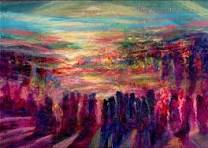
Sefer Bamidbar opens not with miracles, nor covenant, nor crisis—but with a count.
Each tribe is summoned, each clan recorded. Every adult male is registered for service. At first glance, it is administrative and dry—a ledger at the heart of the Torah. But like so much in Torah, the surface conceals a deeper truth.
This is not a census for census’s sake. It is not about power, taxation, or military dominance. It is about visibility. About dignity. About who matters.
God commands Moses to count every individual by name, according to their household, their tribe, their role. The midbar—the wilderness—is vast and chaotic. There are no fixed borders, no institutions, no external scaffolding to hold the people together. But this act of counting affirms something profound: that even in the most formless place, each soul has a place.
This is the foundation of peoplehood. A community is not just a mass of bodies or a crowd of like-minded individuals. It is a covenant of named persons, each known, each needed. In the Torah’s vision, belonging is not passive. It is an active spiritual posture: I am here, and I matter. You are here, and you matter. Together, we hold each other’s presence as sacred.
That idea sounds obvious. But in today’s Jewish world, it is anything but.
We are living through a time of deep fragmentation—religiously, politically, spiritually. Many Jews feel caught between forces that ask them to choose: between peoplehood and values, between tradition and relevance, between belonging and truth. The result is often disengagement—not because people don’t care, but because they feel unseen. Unknown. Uncounted.
Our institutions, for all their strengths, often reinforce this alienation. We tally attendance and dues. We measure success by budgets and clicks. We count the affiliated, the committed, the like-minded. But what about the Jewish teen who feels anxious about Zionism and doesn’t know where to speak? What about the unaffiliated parent who shows up for a tot Shabbat and is met with silence or judgment? What about the Jew-by-choice who is still waiting to be embraced? Or the elder whose synagogue closed and now drifts untethered?
Who is counting them?
Bamidbar does not offer easy answers. But it offers an uncompromising ethic: that community begins with seeing. With naming. With radical, sacred attention. The command to count is, in the language of Torah, “lift up the heads of the children of Israel”—se’u et rosh. Not just a tally, but an elevation. We count not to reduce people to numbers, but to raise their heads, to honor their presence.
That kind of counting demands more than infrastructure. It demands heart. It demands a renewed vision of Jewish community not as a space of preservation, but as a movement of presence. Not just who’s “in the room,” but who’s on the margins. Not just who shares our politics, but who shares our destiny.
It is not a coincidence that Bamidbar is the book of transition. The people are no longer slaves, but not yet sovereign. They are free, but not grounded. It is precisely in that liminal space that the Torah insists: take attendance. Not to control, but to connect. Not to measure value, but to affirm it.
That is what we are called to do now.
We are in our own midbar—uncertain, destabilized, searching. Many of the structures that once held Jewish life feel unsteady, or inadequate to this moment. The safety we assumed was ours is not. The future we imagined feels fraught. But Bamidbar reminds us: peoplehood is not built on comfort. It is built on commitment. On the choice to count one another—in all our difference, complexity, and longing.
It is easy to despair. But the Torah teaches that even in the wilderness, we can build a camp that holds holiness. A community where people are known by name. Where wandering is met with welcome. Where disconnection is answered not with gatekeeping, but with grace.
This is the sacred work of our time: to rebuild trust. To lift heads. To make people feel counted again.
Because we cannot carry the Mishkan—the presence of God—unless we carry each other first.